|
 Drass Drass
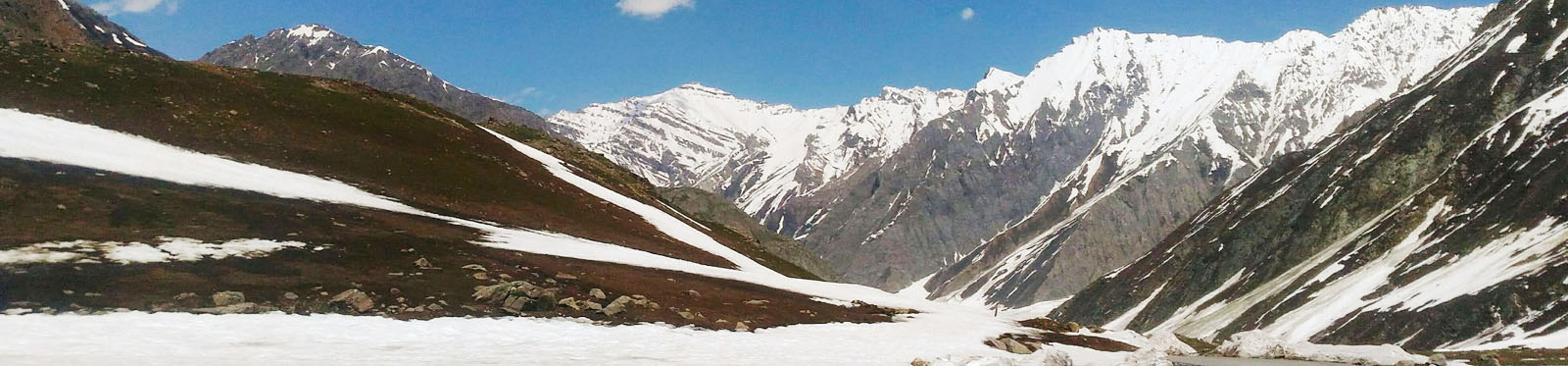
Drass is often known as 'The Gateway to Ladakh'. The town
is the second coldest inhabited place in the world and often
features the best of the snowfall during winters. With
temperatures descending down to nearly minus 40 degree, the
valley remains snow covered even during late autumn or early
spring.
Drass Valley also acts as the base for many long treks
including Suru Valley and Amarnath Cave. A paradise for
hikers, the quaint town also favor some of the shorter hikes
and treks to the upland villages. Ardent hikers and trekkers
can satiate their quest in just no time.
Positioned on the foot of 'Zoji La', Drass spellbinds with
scenic beauty. The town has something for every kind of
traveler. Holidaymakers throng the town for adventure,
serenity, wildlife hunt and spiritual enlightenment.
Drass Memorial
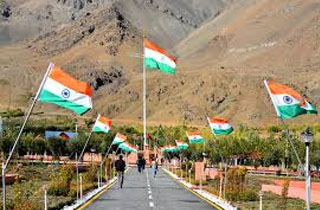 Drass
Memorial was built in the memory of the martyrs who placed
their nation above their life; the martyrs who sacrificed
their lives in Operation Vijay that aimed at getting India
back from the intruders. This Indo-Pak war took place in 1999,
and finally the mighty Indian soldiers defeated Pakistani
troops. Out of the million things an Indian can do for the
country, visiting Drass Memorial is a gesture of respect for
the immortal souls of Indian army men. The memorial is mainly
built of pink-sandstone with an epitaph. The museum in this
war memorial exhibits army emblems, model of Himalyan Mountain
Range and documents archive. There is a special War Gallery
namely Captain Manoj Kumar that has photographs and weapons.
The walls have the name of the soldiers who sacrificed in the
war. A beautiful poem by Dr. Harivansh Rai Bachchan is placed
in the entrance. The Memento Shop sells t-shirts, mugs, caps
etc. Drass
Memorial was built in the memory of the martyrs who placed
their nation above their life; the martyrs who sacrificed
their lives in Operation Vijay that aimed at getting India
back from the intruders. This Indo-Pak war took place in 1999,
and finally the mighty Indian soldiers defeated Pakistani
troops. Out of the million things an Indian can do for the
country, visiting Drass Memorial is a gesture of respect for
the immortal souls of Indian army men. The memorial is mainly
built of pink-sandstone with an epitaph. The museum in this
war memorial exhibits army emblems, model of Himalyan Mountain
Range and documents archive. There is a special War Gallery
namely Captain Manoj Kumar that has photographs and weapons.
The walls have the name of the soldiers who sacrificed in the
war. A beautiful poem by Dr. Harivansh Rai Bachchan is placed
in the entrance. The Memento Shop sells t-shirts, mugs, caps
etc.
Zozila Pass
Srinagar and Leh, is Zoji La pass, in the western section
of the Himalayan mountain ranges.
Around 3528 m (11, 649 ft) above the sea level, the pass is 9
kms from Sonamarg and is an important link between Ladakh and
Kashmir. This pass is considered to be the second highest pass
after Fotu La on the Srinagar-Leh National Highway. At the
peak of the winter season, most of the times, it becomes
inaccessible but the Border Roads Organization (BRO) works to
extend traffic in most of the time of the year. The Beacon
Force is that unit of the BRO, which takes care of clearing
and maintaining the road during winter season.
Kargil
 Kargil,
portion of the western Ladakh region, northwestern Jammu and
Kashmir state, northwestern India. The sector, centred on the
town of Kargil, lies in the Zaskar Range of the Himalayas and
abuts the line of control between the portions of the Kashmir
region administered by India and Pakistan. Kargil town,
located roughly equidistant between Srinagar (southwest) and
Leh (southeast), is considered the gateway to Ladakh. Kargil,
portion of the western Ladakh region, northwestern Jammu and
Kashmir state, northwestern India. The sector, centred on the
town of Kargil, lies in the Zaskar Range of the Himalayas and
abuts the line of control between the portions of the Kashmir
region administered by India and Pakistan. Kargil town,
located roughly equidistant between Srinagar (southwest) and
Leh (southeast), is considered the gateway to Ladakh.
Kargil's landscape is mountainous, rugged, and high, the
minimum elevation being some 8,000 feet (2,440 metres). The
climate is cold and dry, with scanty precipitation that falls
mainly as snow in winter. One locality, Dras (Drass), is
reputed to be one of the world's coldest permanently inhabited
places, with winter temperatures falling to as low as - 40 F
(- 40 C) or colder. Vegetation, mainly grasses and shrubs, is
largely confined to river valleys at lower elevations, as the
higher places are rocky and largely barren. Most of the
residents of Kargil are of Balti origin, and the large
majority are Shīʿite Muslims.
Because of its close proximity to the line of control, Kargil
has often been the site of border conflicts between India and
Pakistan. The largest and deadliest of these clashes took
place in 1999. In early May the Indian military learned that
Pakistani fighters had infiltrated Indian-administered
territory. The intrusion triggered intense fighting between
the two sides that lasted for more than two months. The Indian
army reclaimed most of the area on the Indian side that had
been occupied by the infiltrators, and hostilities finally
ended in July, when the remaining Pakistani fighters retreated
from the Indian zone. Several hundred combatants were killed
on each side during the conflict.

|